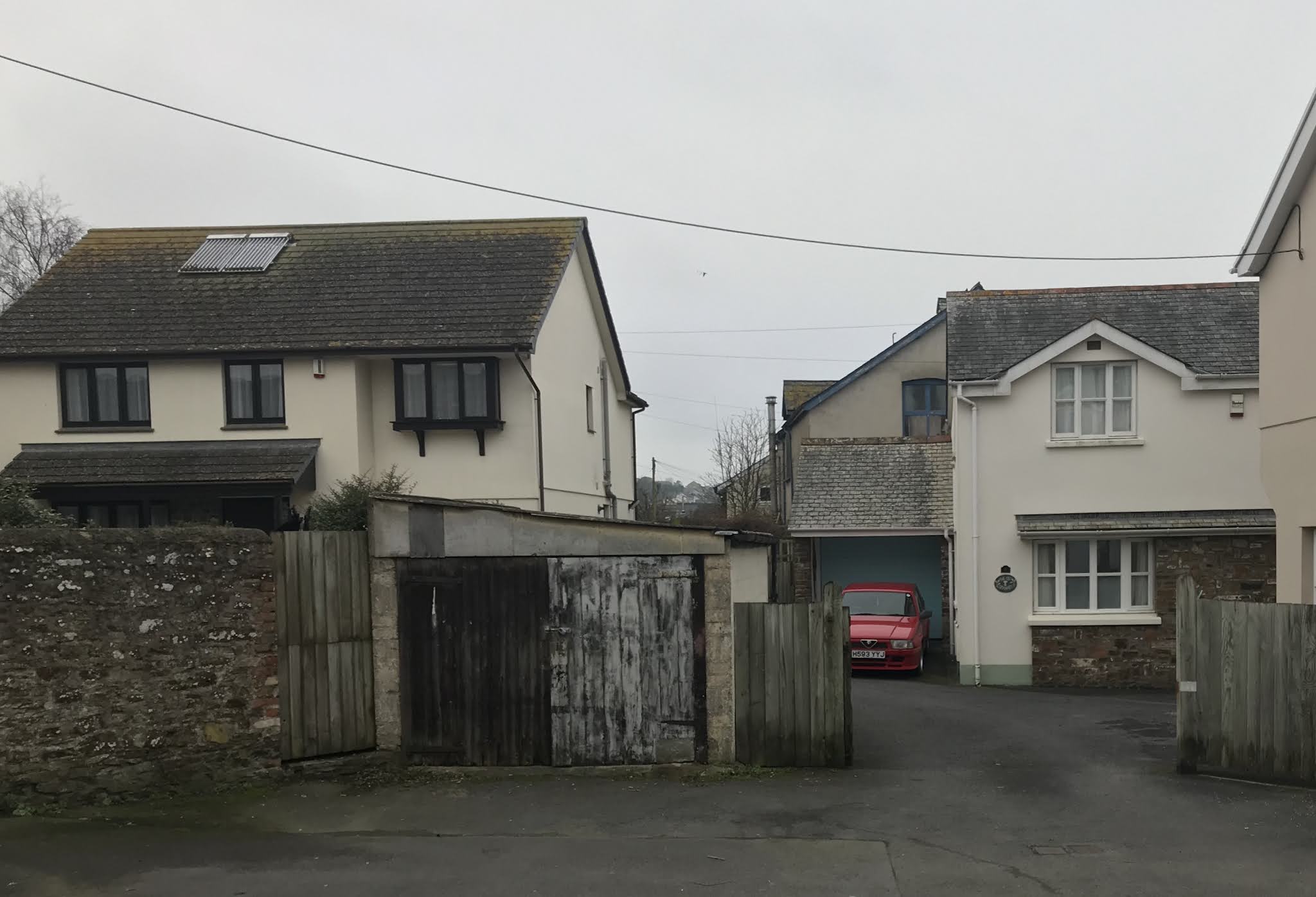
![]() |
| Original shared driveway behind old garage. |


![]() |
| Over door roof support beam |
![]() |
| The roof was built using upside down V rather than A frame rafters to create more interior space. |
![]() |
| SuperToy has come home |
Random Squawking - more of a really slow blog - various topics from coding to living. Lets just see how it goes.
![]() |
| Original shared driveway behind old garage. |


![]() |
| Over door roof support beam |
![]() |
| The roof was built using upside down V rather than A frame rafters to create more interior space. |
![]() |
| SuperToy has come home |
LaTex was machine code of publication - the world moved on to wysiwyg only about 30 years ago. Any publisher that only takes submissions in that archaic language is being rather stoneage. Camera / publication ready copy can be created in so many easy to use tools that to insist on using an ancient relic just places unnecessary barriers to entry.
If that same publisher does not provide article templates just vaguely worded "guidelines" then you know you are dealing with a publishing dinosaur or paper generating mill that provides no value add - look elsewhere.
Sure LaTex was a good and relatively bug free system, used by many, but pushing authors to be typographical mark up compilers is like asking painters to be chemists and make their own colours.
Following on from an earlier review of two corporate fraud books this holiday season fraud reviews were taken to a higher level.....
Listing gives :
"A BOOK OF THE YEAR FOR THE FINANCIAL TIMES AND FORTUNE MAGAZINE.
The epic story of how a young social climber from Malaysia pulled off one of the biggest financial heists in history.
In 2015, rumours began circulating that billions of dollars had been stolen from a Malaysian investment fund. The mastermind of the heist was twenty-seven-year-old Jho Low, a serial fabulist from an upper-middle-class Malaysian family, who had carefully built his reputation as a member of the jet-setting elite by arranging and financing elaborate parties for Wall Street bankers, celebrities, and even royalty.
With the aid of Goldman Sachs and others, Low stole billions of dollars, right under the nose of global financial industry watchdogs. He used the money to finance elections, purchase luxury real estate, throw champagne-drenched parties, and bankroll Hollywood films like The Wolf of Wall Street.
Billion Dollar Whale reveals how this silver-tongued con man, a ‘modern Gatsby’, emerged from obscurity to pull off one of the most audacious financial heists the world has ever seen, and how the financial industry let him. It is a classic harrowing parable of hubris and greed in the financial world."
As of 2021 Jho Low is still on the run but the net tightens after his rather nice ship was impounded.
| The Equanimity, a luxury yacht belonging to fugitive Malaysian financier Low Taek Jho, was seized and brought to Malaysia in August 2018. It was later auctioned off [Lai Seng Sin/Reuters] |
When thinking about these strange times it can be helpful to relate what's going on to things we understand. Here is a Q&A for those of a biker persuasion.
Q: "Covid-19 is just another flu virus, why should I worry about that ?"
In the same way that most bikes have two wheels, an engine and handlebars they are not all the same. Outsiders just see a motorbike, we see a Harley, a Ducati, a Triumph etc. The internals matter, some bike are screaming two strokes and some big capacity four strokes. This particular virus is a killer and disabler that has a much higher than flu impact on some of those that get it.
Q: "Is this lockdown is just a way to control us all?"
Sometimes you just have to follow club rules. We all saw the impact of this virus and how it got around the world in a matter of weeks using sneaky tactics of "spreading but not showing" and "jumping on the already weak". Not catching the bug and not passing it on gives us the control over the bug.
Q: "How do masks help ?"
Masks are the new crash helmets. A bit annoying but reduces the medical impact of an incident. Probably not needed 9/10 times but noone knows when that 1/10 prang is going to happen and when it does it's probably the other persons fault for getting the virus/pulling out of junction.
Q: "This Covid-19 situation is a government conspiracy to control us."
Certainly lots of countries are using the same tactics to reduce the impact of the global virus and they all started doing the similar things within a few weeks in March. However this is not the first time bugs have traveled round the world think Bubonic plague, "Spanish" flu ( which BTW actually started in Kansas), SARS, MERS, HIV and others. Reaching for the infection prevention playbook is the sensible action that every government should have done. See the extra impact this bug has had on countries that were slow to take avoiding actions reminds us all to "look down the road" and "prepare for the unexpected actions of other road users". We all know some fools that ride like a nutter and are always in scrapes and spills.
![]() |
| March 2020 |
Q: Why are the restrictions rules always changing ?
There is no doubt that lockdowns and furloughs have a bad impact on the economy whilst reducing the spread of infection. We have seen that more lockdown results in less bugs. Less lockdown means a better economy but more deaths and infections. There is a slim balance between medical and economic welfare but that balance depends on how the situation is in any country at any time. The ongoing discussion is similar to "Whats the best bike - racer or cruiser ?" Just sometimes the answers to that question is "Neither - we need a snowmobile this week because there is three feet of snow all over."
Q: How bad has it been ?
That's a complex question that comes down to the excess deaths figures as seen here for the UK Overall about 12% more people have died than expected. About a 10..15% impact on economic production GDP for 2020 with remanning levels of unemployment not seen since the early 90's. Huge levels of government support spending have pilled trillions £ on the national debt. Yes it has been pretty bad.
Q: I don't know anybody that had Covid-19.
![]() |
| Cray XMP/48 with Apple SE inside (c)1987 John Greenleigh |
Cray Research and Apple Computers, seemly at opposite ends of the computer price spectrum, do have some subtle historical links. It is well known that Seymour Cray used an Apple desktop when designing Cray Computer Corp machines. Macintosh computers where the desktop of choice and used almost exclusively whilst the company worked on the Cray-3 and Cray-4 projects. Much of the work was moving text and graphic files around a shared network. "Seymour said he thought it was odd that Apple bought a Cray to design Macs because he was using Macs to design Crays. He sent me his designs for the Cray 3 in MacDraw on a floppy." reports KentK.
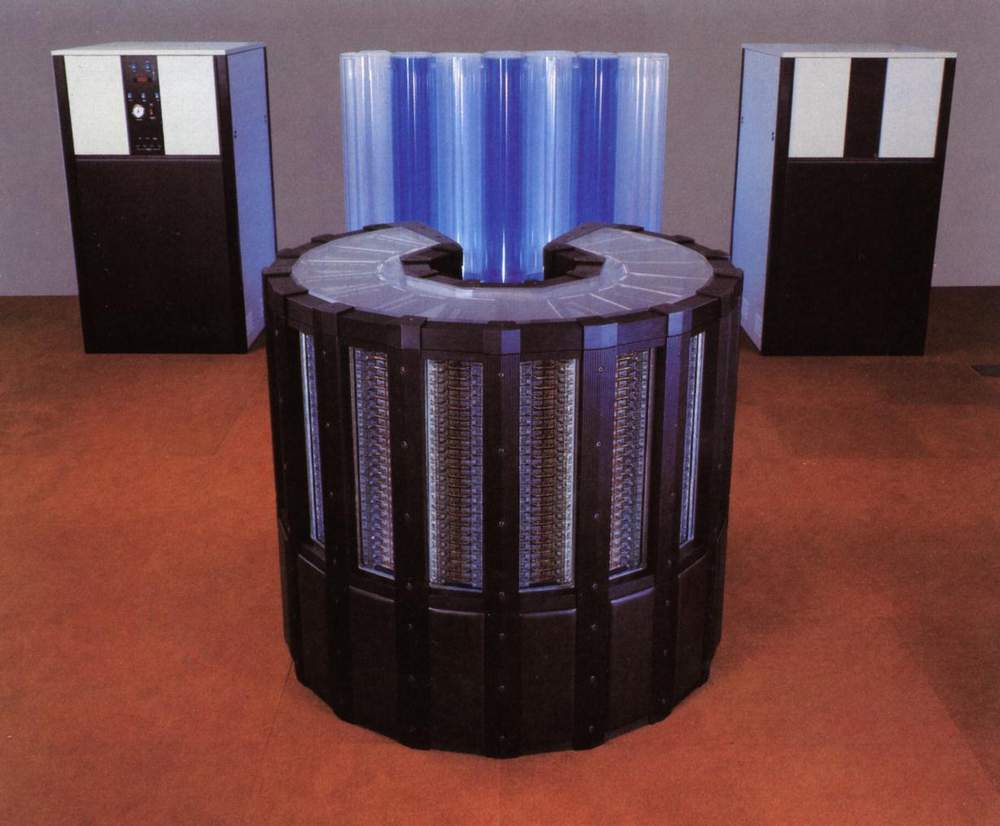
Apple Computer had a sequence of Cray machines starting in 1986 with an XMP/48 shown above followed by another XMP in Feb 1991. An upgrade to a Cray YMP-2E arrived later in 1991 and finally one of the smaller air-cooled Cray Y-MP EL from Dec '93 to Jun '98.
Legend has that Apple's first XMP was bought by Steve Jobs after he walked into the Cray facility in Mendota Heights. However "Mike" a more reliable source relates ....
"The first machine installed at Apple was an X-MP/48 completed in August 1986. It had painted purple metallic columns and black power supplies. John Scully was the CEO, and he called the Western Region office in Pleasanton, Ca to get the salesman for his area of Cupertino, and his call was directed to Mike Wilhelm, the Western Region Manager, who after a lengthy conversation dispatched the salesman Bence Gerber, who sold the machine. I was standing at the receptionist desk who took John Scully's call when it came in, and got excited that Apple called us, and then went to Mike Wilhelm's secretary to hear what happened. I was also present for the installation, and spent many days covering the site."
According to a quote from MacObserver Website the timeline would indicate that John Scully was indeed in charge by install time.
"1985: Apple's board of directors authorizes John Sculley to remove Steve Jobs as executive VP and general manager of the faltering Macintosh division. Sculley, who genuinely liked Jobs, didn't act right away, hoping to make a smooth transition. Only after discovering Jobs' plan for a coup the following month did Sculley finally strip the founder of all operational responsibilities."
The Apple Cray machines were originally purchased to help out on a computer on a chip project and other engineering projects. Such projects included using the first Cray XMP as a Macintosh emulator for user interface design improvements. The site analyst reports ..
".. they sometimes ran the first XMP as a single user MacOS emulator ... They had a custom built frame buffer and a mouse hooked up to the IOP (Input/Output Processor)."
Other applications were Computational Fluid Dynamics codes for disk drive head design improvement and complex chip and board logic proving tests. The Apple Cray machines eventually earned their keep running MOLDFLOW an injection plastic modelling program ( producing some results in the form of Quicktime movies) and later as a file server.
![]() |
| Example of MOLDFLOW output |
T3d cube of cubes logo
animated by changing the size of the surrounding balls.
What is less well known however is that the small active display panel on the front of the Cray T3D machines was an Apple powerbook. The powerbook ran a Macromedia presentation showing the T3D cube of cubes logo with an orbiting growing/shrinking sphere. The display at one site was changed to alternate with a presentation plaque display. It was rumoured that one site engineer ordered a collection of spare bits that, over time, comprised a complete new powerbook.
![]() |
| Cray T3D Tool Time Sales booklet showing the T3D with Powerbook generated logo front and centre (Scale T3D is aprox 2500mm tall) |
The Sept 1999 launch on the www.Apple.com web site of the G4 Macintosh computers displayed a YMP-8D computer on the processor details page. Whilst there was no direct reference to that particular machine there was a re-quote of the Seymour quote about "using an Apple to simulate the Cray-3" in a sidebar. The G4 was being touted as a "Supercomputer for the desktop" and with the performance figures of a Gigaflop/s (1 CPU) which is certainly up to at least 1992 supercomputer cpu speeds. The YMP pictured on the site would have had 0.333 Gflop/s per cpu but was sold as sustaining 1 Gflop/s, for the whole machine, on real life applications. Only comparable benchmarks would show if the Apple G4 could match the memory size, memory bandwidth and IO capacity the 8 year old Cray shown. There is however no doubt that the G4 would be cheaper to purchase than any machine from the Cray range.
The once popular Macintosh telnet communications program
developed by NCSA (National Centre for Supercomputing Applications at the
university of Illinois) in has an icon which is an Cray XMP surrounded by a
network with Macs. NCSA had a Cray accessed by Macs and thus needed to develop
such a program. One of those strange coincidences between Apple and Cray were problems using Perspex as a chassis material. Apple had problems with the Power PC G4 Cube machine as the corners were subject to cracking in some instances. Over at Cray the innovative total immersion cooling Cray 2 had cylindrical coolant reservoirs and cascades. After some time the coolant reservoirs tower material started to "craze" and fine cracks appeared. This was remediated by a new designed a new rectangular cascade that had a smaller footprint, was made of glass that solved the problem.
![]() |
Apple Power
PC G4 Cube (scale 180mm
tall) |
![]() |
| Early Cray-2 showing Cylindrical coolant reservoirs (scale Cray-2 in foreground is 1200mm tall) |
![]() |
| Cray-2 showing
revised coolant reservoir ( scale Cray-2 is 1200mm tall) |
Further details in this article from Cray Channels 1987 (c)Cray Research Written by Kent Koeninger at or about the time of Apple's first Cray purchase.
With the early versions of this prestige sports brand reaching 25 years old it’s certainly time to review the versions and features available in this now affordable car. The Mercedes-Benz SLK is a luxury sports roadster named after Sportlich (sporty), Leicht (light), and Kurz (short). All models are built at the Mercedes plant in Breman, Germany. The later R172 model was renamed SKC-Class to fit with other Mercedes Benz series.
| Model and years | Engine size / gears | Body Styles | Notable features | Current approx costs |
SLK Mk1 - R170; 1996–2004 | SLK 320 is V6 others are 2 litre mostly with Kompressor (supercharger) | 2 door with power retractable hardtop | Facelift and new engines in 2000 Gearbox 6 Speed after 2001 | £1500 - £6000 for low milage top spec example |
SLK Mk2 - R171; 2004–2011 | 1800 Kompressor 4 Cyl, 2000cc V6 and 5439 cc V8 Available | Retractable Hardtop pronounced F1 style nose. | Airscarf, Facelift and new engines 2008 | £5000 - £9000 Add £500 for AMG badge |
SLK Mk3 - R172; 2011–2019 SLC-Class | 4 cyl, V6 & V8 with turbos also available as diesel in SLK 250 CDI | Retractable Hardtop Flat front similar to other MB cars. | 2015 on BlueEFFICIENCY Facelift 2016 renamed to SLC Electronically operated window tint shade for the sunroof, called Magic Sky Control. Auto folding mirrors. | £7500 to £40000 More for some specials variants |
The First Fifteen Lives of Harry August by Claire NorthI have always been fond of time travel stories and warped (but plausible) viewpoints on this and other worlds. This book was a revelation, a stand out giant of a story. The premise, quite simple, as a "kalachakra", Harry August the hero reincarnations resets his life back to zero but he keeps memories to build on previous experience. Other such souls exist some working for timeline stability others have a dark selfish agenda seeking to dominate world via accelerated technological advancement. The conflict works out over the 15 lives of Harry in which he comes to terms with his illegitimate birth origins and circles around with his deepest friend/enemy both working for and against the world breaking cause. The paradoxes of time manipulation are not over exaggerated serving to move the narrative along without over complication. Lives are long and not always exciting adding to the genuine autobiographical feel of the book.
A really great read that evolves over the course of Harrys personal development. Once hooked in I could not put this one down and has left me with a confirmed impression that humanity is often not ready for the technology we have developed
Was read just after "The Rise and Fall of D.O.D.O" By Neal Stevenson which is in the same time manipulation fiction sub-sub-genre but that's another review.
| Model and years | Engine size / gears | Body Styles | Notable features | Current approx costs |
MR2 Mk1a & Mk1b 1984–1989 | AW10 - 1.5L Petrol AW11 - 1.6L DOHC 5 speed manual, 4 speed auto | Hard top and T-Bar | Super charger on some Japan domestic cars | £300 project to £7,000 mint |
MR2 Mk2 GT Coupe and GT T-Bar 1989–1999 | SW20: Various 2.0L some Turbos | Tin top and T-Bar coupe. Also unbranded Spyder version | Rear Spoilers lots of after markets body kits and goodies. | £300 project to £5,000 mint or special racer |
MR2 “Spyder” and “Roadster" 1999–2007 | SW30: 1.8L Petrol 5 or 6 speed gearbox | Softtop with removable hard top option | SMT paddle gear shift option | £300 Project to £7,000 mint |